Definitions
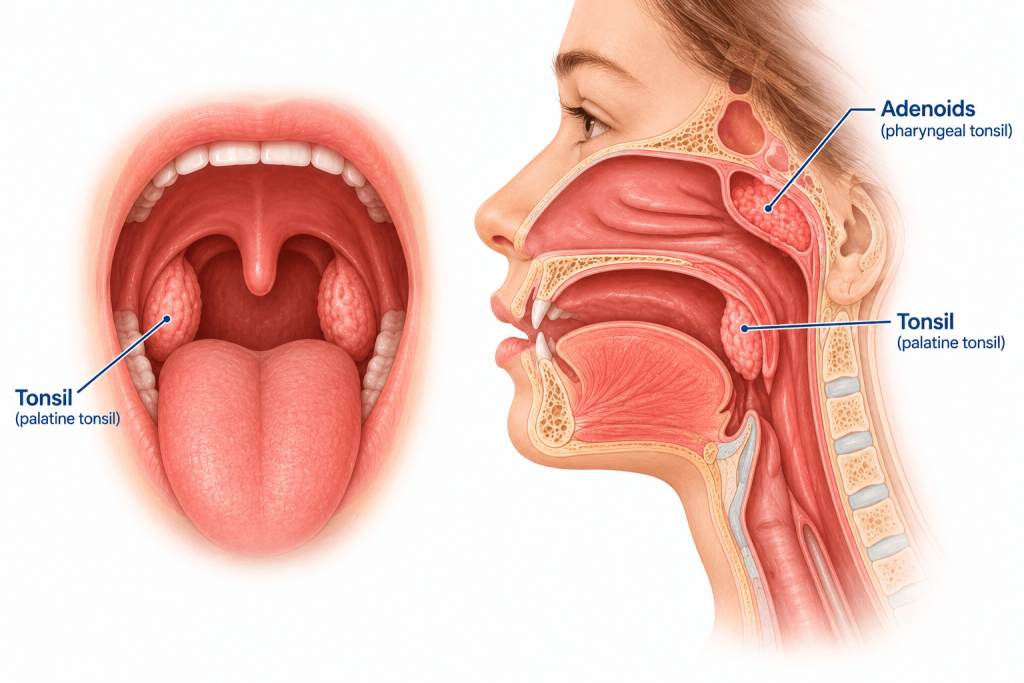
Tonsils (palatine tonsils): Tonsils are small, soft masses of tissue at the back of the throat that act as an early immune defense against germs entering through the mouth and nose.
Adenoids (pharyngeal tonsil): A single mass of lymphoid tissue in the roof and back of the nose. They are not visible on routine mouth examination and are assessed by lateral neck X-ray or nasal endoscopy (using a thin, flexible or rigid tube equipped with a light and a tiny camera). They are largest between ages 3 and 7 and usually regress by adolescence.
Signs & Symptoms
Acute Tonsillitis
- Sore throat, painful swallowing, fever, malaise
- Enlarged, red tonsils, possibly with white areas
- Bad breath, referred ear pain (otalgia)
- Neck swelling
Chronic Tonsillitis
- Recurrent sore throats
- Persistent bad breath
- Cryptic tonsils with expressible pus
- Persistent neck swelling
Adenoid Hypertrophy / Adenoiditis
- Nasal obstruction, mouth breathing, snoring
- Persistent nasal discharge, hyponasal speech
- “Adenoid facies” (open mouth, elongated face, high-arched palate, pinched nostrils)
- Recurrent otitis media or otitis media with effusion, and hearing loss
- Obstructive sleep apnea, restless sleep, daytime tiredness
- Chronic cough
Indications for Surgery
Tonsillectomy
Know More
Recurrent tonsillitis meeting the Paradise criteria: 7 episodes in 1 year, 5 per year for 2 years, or 3 per year for 3 years
Obstructive sleep-disordered breathing or sleep apnea
Peritonsillar abscess (quinsy), a pus-filled pocket that forms near one of the tonsils
Suspected malignancy (unilateral enlargement, ulceration, firmness, neck swelling)
Tonsillar hemorrhage not controlled by other means
Difficulty swallowing or speaking caused by massive hypertrophy
Diphtheria (bacterial infection) carrier state
Relative Indications
Know More
Chronic tonsillitis not responding to medical treatment
Halitosis (bad breath)
Recurrent infection with a risk of rheumatic fever
Febrile seizures (abnormal electrical activity of the brain) triggered by tonsillitis
Tonsil biopsy for diagnosis
Adenoidectomy
Know More
Obstructive sleep apnea or persistent nasal obstruction
Recurrent otitis media or persistent otitis media
Recurrent or chronic adenoiditis and rhinosinusitis
Dentofacial abnormalities from chronic mouth breathing
Suspected nasopharyngeal malignancy (biopsy)
Contraindications (Relative)
Know More
Bleeding disorders
Acute infection
Severe anemia
Uncontrolled systemic disease
Postoperative Care
Postoperative care after an adenotonsillectomy focuses on managing pain, preventing dehydration, avoiding heavy physical activity, and closely monitoring for signs of bleeding.
Recovery typically takes about 10 to 14 days.
Cancer
Tonsil Cancer
- Unilateral tonsillar enlargement
- An ulcerated or firm mass
- A sore throat lasting more than 3 weeks
- Painless neck swelling
- Pain in ears
- Weight loss
- Dysphagia
- Bleeding
- Trismus (difficulty or inability to open the mouth completely)
- Fever and night sweats
Adenoid / Nasopharyngeal Cancer
- Suspect cancer in adults with:
- New “adenoid” tissue
- Unilateral accumulation of fluid in the middle ear
- Epistaxis
- Nasal obstruction on one side
FAQ
Viral vs. Bacterial Tonsillitis
| Feature | Viral | Bacterial |
|---|---|---|
| Onset | Gradual | Sudden |
| Associated symptoms | Cough, rhinorrhea, hoarseness, conjunctivitis, diarrhea, mouth ulcers | Usually no cough and no coryza |
| Fever | Low to moderate | Often high |
| Tonsils | Red, swollen, usually little or no white area | Marked swelling with patchy exudate |
| Neck swelling | Mild | Tender anterior neck swelling |
| Course | Self-limiting, 3–7 days | Can cause complications if untreated |
| Treatment | Supportive | Antibiotics (penicillin/amoxicillin) |
How to Differentiate Infection from Cancer
| Feature | Infection | Malignancy |
|---|---|---|
| Onset | Acute | Insidious, progressive |
| Laterality | Usually bilateral | Often unilateral |
| Pain / Fever | Prominent | Often absent or mild early |
| Surface | Red, exudative, soft | Ulcerated, firm, irregular |
| Nodes (neck swelling) | Tender, mobile | Hard, fixed, painless |
| Response to treatment | Resolves in days to weeks | Persists despite treatment |
| Systemic | Malaise | Weight loss, night sweats |
When Tonsils and Adenoids Cause Problems
Infected Tonsils
Sore throat
Pain when swallowing
Fever
Red, swollen tonsils
Sometimes white patches
Enlarged Adenoids
Blocked nose
Mouth breathing
Snoring
Ear infections
Trouble sleeping
When Surgery May Be Needed
Throat infections that keep coming back
Loud snoring with pauses in breathing at night
Repeated ear infections or fluid in the middle ear
An abscess (pocket of pus) near the tonsil
One tonsil that is much larger than the other
Virus vs. Bacteria: Simple Explanation
Virus: Usually comes with a cough, runny nose and hoarse voice. It gets better by itself in a few days.
Bacteria: Usually causes a sudden high fever, a very sore throat and white patches, with no cough. It needs antibiotics.
Cancer: Warning Signs
Cancer is uncommon. Warning signs include:
A sore throat lasting more than 3 weeks
One tonsil bigger than the other
Painless swelling in the neck
Unexplained weight loss
These should always be checked by a doctor.
Tonsil Stones vs. Bacterial Tonsillitis
| Feature | Tonsil Stones | Bacterial Tonsillitis |
|---|---|---|
| Fever | Usually none | Often present |
| Pain | Mild or none | Severe |
| White spots | Hard, can be picked out | Soft, patchy exudate over the tonsil |
| Bad breath | Prominent | Possible |
| Treatment | Hygiene, removal | Antibiotics |
Tonsil Stones
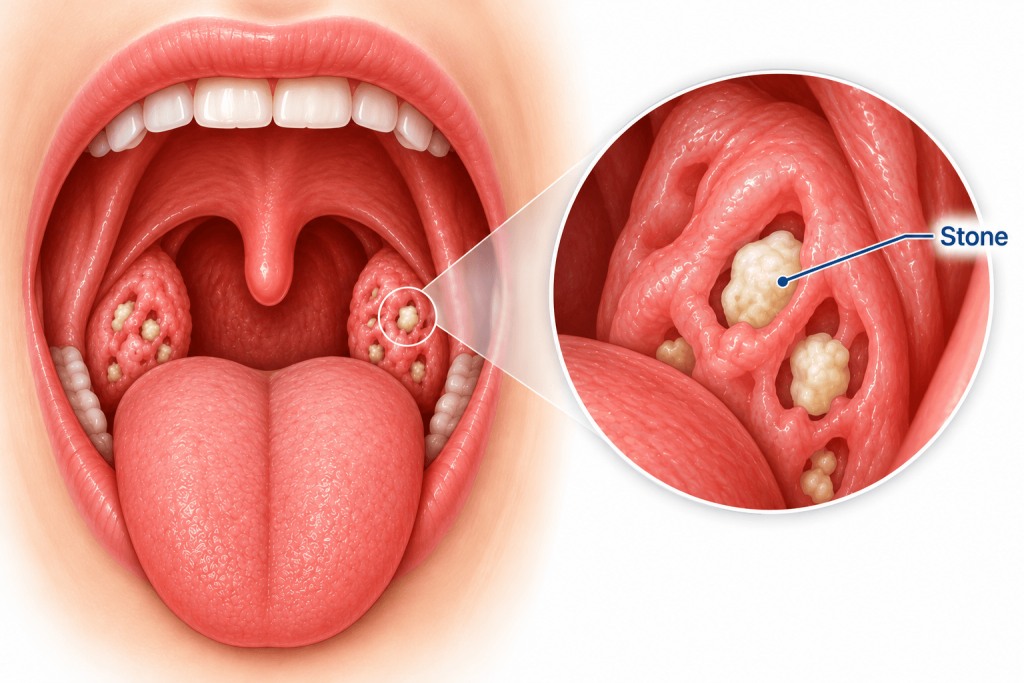
Tiny white or yellow “pebbles” that get stuck in the pockets of your tonsils. They are usually harmless but can smell bad.
Causes and Risk Factors
- Deep or irregular tonsil crypts (pits and folds)
- Chronic or recurrent tonsillitis (scarred, cryptic tonsils)
- Large tonsils with more crypts
- Poor oral hygiene
- Chronic sinusitis
- Dry mouth, smoking
Age Group: Most common in teenagers and young adults; uncommon in young children.
Diagnosis
- Clinical examination: Usually diagnosed by throat examination
- Imaging (X-ray, CT): Only if the stones are deep or hidden, or the picture is unclear (CT shows calcified spots)
Signs and Symptoms
- Many people have no symptoms and find them by chance
- Halitosis (bad breath): The most common complaint, caused by sulfur compounds from bacteria
- Visible white or yellow spots on the tonsils
- Visible white or yellow spots on the tonsils
- Mild sore throat or irritation
- Pain on swallowing
- Referred ear pain: Pain that is felt in or around the ear, but originates from a completely different part of the body
- Metallic or bad taste
- Tonsil swelling or redness if inflamed
- Occasionally coughing up small white pieces of material
Size: Stones range from a grain of rice to, rarely, several centimeters (giant stone).
When to see a doctor
Consult an ENT specialist if tonsil stones keep coming back, you experience persistent bad breath despite good oral hygiene, or you develop large stones, pain, bleeding, or difficulty swallowing.
Management
Home Care and Prevention
Good oral hygiene: brushing teeth and tongue, flossing
Gargling with warm salt water
Staying hydrated and avoiding smoking
Antiseptic mouthwash
Treating sinus problems
Removal at Home (Caution)
Gentle gargling or coughing may dislodge them
Avoid picking at them with sharp objects, roughly used cotton buds or fingers, as this can cause bleeding, injury or infection
Medical Treatment
Antibiotics only if there is an associated infection (not for stones alone)
Removal by a doctor using curettage or suction
Surgical Treatment
Tonsillectomy if stones are large, frequent or painful, or cause persistent halitosis or recurrent tonsillitis, and other treatments have failed.