Allergic Rhinitis (Nasal Allergy)
Allergic rhinitis is inflammation of the lining of the nose caused by an immune reaction to inhaled allergens (harmless substances). The immune system mistakes these substances for a threat and releases histamine and other chemicals, causing nasal symptoms. It is often called “hay fever,” although it involves neither hay nor fever. Hay fever is an allergic reaction that causes cold-like symptoms, such as sneezing, congestion and itchy eyes, triggered by airborne particles rather than a virus.
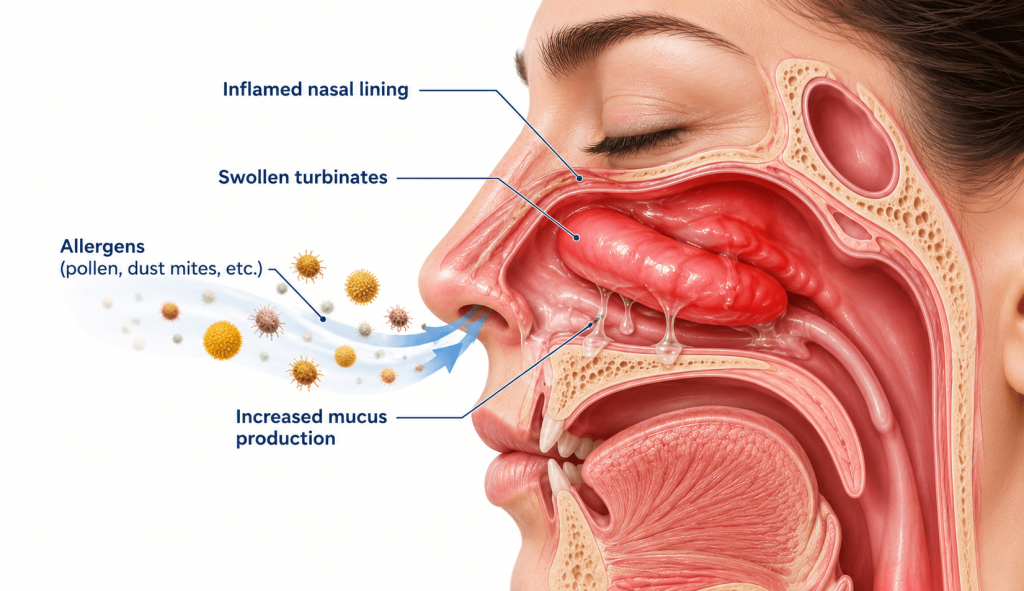
Causes (Triggers)
- Pollen (trees, grasses and weeds)
- Dust mites
- Pet dander (cats and dogs)
- Occupational allergens (latex, flour and animal proteins)
- Irritants that worsen symptoms: smoke, perfume, strong odors and air pollution
Signs and Symptoms
- Sneezing, often in bouts
- Runny nose with clear, watery discharge
- Nasal congestion or stuffiness
- Itching of the nose, throat, ears or roof of the mouth
- Itchy, red, watery eyes
- A sensation of excess mucus gathering or dripping down the back of the throat, and cough
- Reduced sense of smell
- Fatigue, headache and poor concentration
Treatment
1. Allergen avoidance
- Use dust-mite-proof covers on mattresses and pillows, and wash bedding weekly in hot water
- Keep windows closed during high pollen seasons; use air conditioning
- Control humidity and remove mold
- Keep pets out of the bedroom
- Shower and change clothes after being outdoors
2. Medical
3. Surgical after or complication
- Such as sinusitis, ear infections (otitis media), nasal polyps, sleep disturbance and worsening of asthma.
FAQ
Are allergies inherited from the Father or Mother?
Allergies themselves are not passed down directly. What a child inherits is a tendency to develop allergies, called atopy. So a parent may have hay fever while the child develops eczema, asthma or a food allergy instead, or a different allergen trigger altogether.
Risk by Family History
These are approximate figures that vary across studies:
Family history | Child’s approximate risk of allergic disease |
Neither parent allergic | 5–15% |
One parent allergic | 20–40% |
Both parents allergic | 40–70% |
Both parents with the same type of allergy | Up to 70% or higher |
Allergy results from genes plus environment:
- Genetics: many genes are involved
- Environment: allergen exposure, tobacco smoke, air pollution, infections, diet and early-life microbial exposure all influence whether the tendency becomes an actual disease.
This is why identical twins do not always share the same allergies, and why siblings can differ.
Can the risk be reduced?
- Avoid smoking during pregnancy and around children
- Breastfeeding is encouraged for its general health benefits, although it has not been shown to reliably prevent allergy
- Keep the home clean and smoke-free, but extreme sterility is not needed
This is general educational information and does not replace a doctor’s consultation. If your child has a strong family history, a pediatrician or allergist can give personalized advice.
When to see a doctor
See a healthcare provider if symptoms last more than a couple of weeks, interfere with sleep or daily life, do not respond to over-the-counter treatment, or are accompanied by wheezing, facial pain, fever or thick, colored mucus.
This is general educational information, not a substitute for personal medical advice.