Snoring
Snoring is a harsh or rattling sound made during sleep when air flowing through the upper airway makes the soft tissues vibrate, mainly the soft palate and the uvula. An enlarged or elongated uvula can contribute to it. Snoring is common and is not always a sign of a medical problem, but it can sometimes be a sign of sleep apnea (see below).
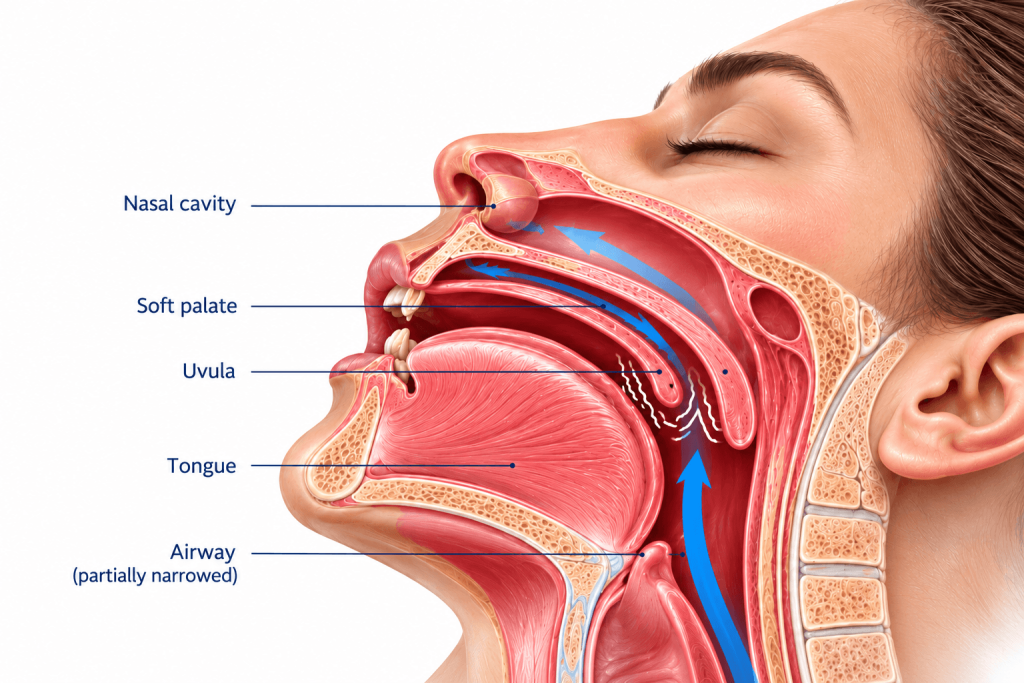
Causes
- Relaxation of the throat and tongue muscles during sleep
- Excess weight, especially around the neck
- Nasal congestion, allergies, or a deviated septum
- Enlarged tonsils or adenoids
- Alcohol, sedatives, or smoking
- Sleeping on the back
- Risk increases with age
Symptoms
- Noisy breathing during sleep
- Dry mouth or sore throat on waking
- Restless sleep
- Morning tiredness, particularly in more severe cases
Diagnosis
- Examination of the nose, mouth, and throat
- A sleep history, often with input from a bed partner
- A sleep study if sleep apnea is suspected
Treatment
- Weight loss and regular exercise
- Avoiding alcohol and sedatives before bed
- Sleeping on your side
- Treating nasal congestion or allergies
- Treating enlarged tonsils or other anatomical causes when present
Sleep Apnea
Sleep apnea is a disorder in which breathing repeatedly stops (apnea) or becomes shallow (hypopnea) during sleep. Pauses last at least 10 seconds and can occur many times per hour. Severity is usually described as mild, moderate, or severe, based on the number of breathing events per hour measured in a sleep study.
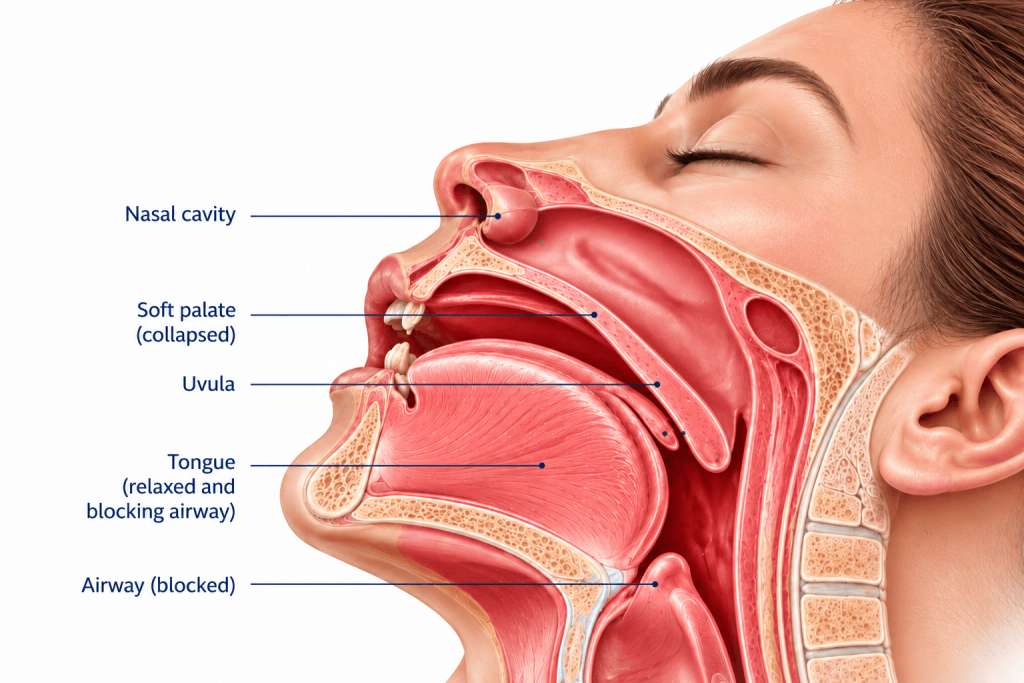
Main Types
Obstructive Sleep Apnea (OSA)
The most common type. The airway narrows or collapses during sleep.
Central Sleep Apnea (CSA)
The brain does not send proper signals to the breathing muscles.
Complex Sleep Apnea
Central apneas that appear or persist in a person with OSA when treatment with CPAP is started.
Diagnosis
General
Clinical evaluation and screening questionnaires
Polysomnography
An overnight sleep study in a sleep laboratory that monitors breathing, oxygen levels, heart rate, brain activity, and movement.
Home sleep apnea test
A simplified portable test done in your own bed. It may be suitable for adults who are likely to have moderate to severe OSA and who do not have significant heart or lung disease, suspected central sleep apnea, or other sleep disorders.
What it measures
Most devices track airflow or breathing effort, blood oxygen levels, heart rate, record snoring and body position.
How it works
A doctor typically orders it after evaluating symptoms like loud snoring, gasping or pauses in breathing during sleep, daytime sleepiness, or morning headaches. You wear it for one night.
What the results show
The key number is the AHI (apnea-hypopnea index), the number of breathing interruptions per hour of sleep. Roughly, 5 to 15 is mild, 15 to 30 is moderate, and over 30 is severe sleep apnea. If it’s positive, treatment options include CPAP, oral appliances, positional therapy, weight management, or sometimes surgery.
Causes
- Obesity and a large neck circumference
- A narrow airway, or enlarged tonsils and adenoids
- Male sex, older age, and family history
- Smoking, alcohol, and sedative use
- Nasal obstruction
- For central sleep apnea: heart failure, stroke, opioid use, or high altitude
Symptoms
- Loud, frequent snoring
- Pauses in breathing noticed by a partner, often with gasping or choking
- Excessive daytime sleepiness
- Morning headaches
- Difficulty concentrating and memory problems
- Irritability or low mood
- Waking with a dry mouth or sore throat
- Frequent urination at night
- Falling asleep while driving, or nearly having an accident
Why it matters
- Untreated sleep apnea is linked to high blood pressure, heart disease, stroke, type 2 diabetes, and a higher risk of accidents caused by sleepiness. Getting assessed and treated can reduce these risks.
Sleep Apnea in Children
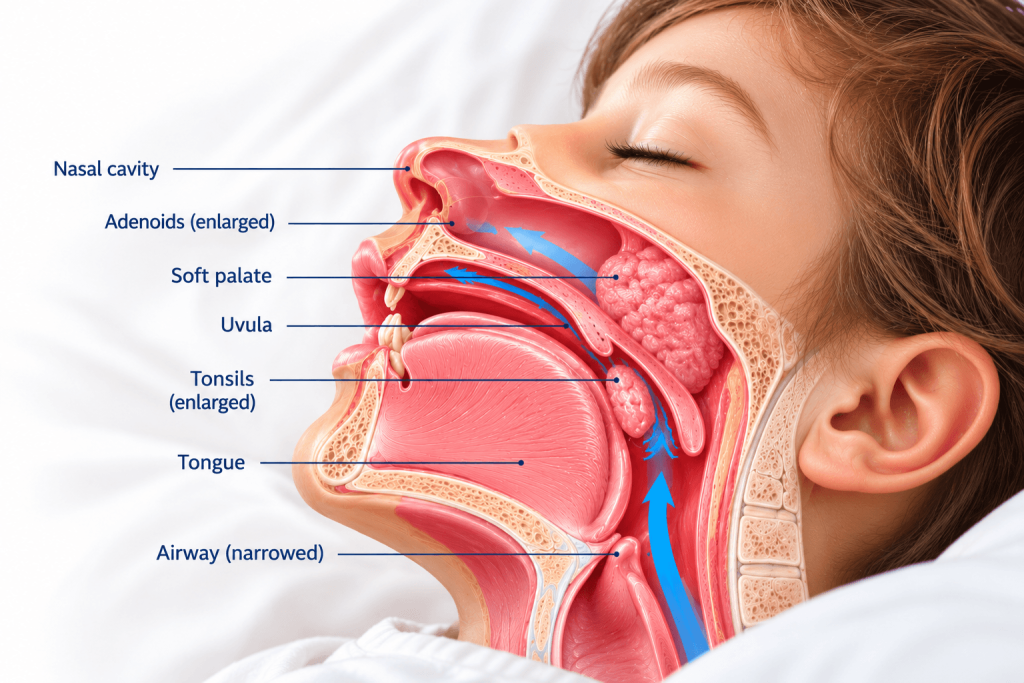
Children can also have sleep apnea, most often related to enlarged tonsils and adenoids. Signs include loud snoring, restless sleep, mouth breathing, bedwetting, daytime tiredness, and difficulty concentrating or behavior problems.
Treatment
The right treatment depends on the type and severity of sleep apnea, your anatomy, and your overall health.
Lifestyle changes
The right treatment depends on the type and severity of sleep apnea, your anatomy, and your overall health.
CPAP (continuous positive airway pressure)
Oral appliances
Custom-made mouthpieces that move the lower jaw or tongue forward. They may suit some people with mild to moderate OSA or those who cannot tolerate CPAP.
Positional therapy
Surgery
- May be considered in selected patients, for example when CPAP is not tolerated or when a specific blockage is found. Options may include:
- Nasal surgery, which treats nasal blockage and may make other treatments easier to use. On its own it is not usually a cure for sleep apnea.
- Removal of the tonsils and adenoids, which is often the first treatment in children.
- Procedures on the soft palate, throat, or base of the tongue
- Jaw advancement surgery
When to see a doctor
See a doctor if you or your partner notice loud snoring with pauses in breathing, if you feel very sleepy during the day, or if you have fallen asleep while driving. Seek urgent medical care for chest pain, severe breathlessness, or if someone struggles to breathe.